(Note 2026-09-02: This is a recap of Web à Québec 2019. The roles, affiliations, prices, technologies and statements reported here reflect what was presented at the event.)
I attended fewer talks on the second day because I had to give my own! Day three made up for it with a fantastic lineup of genuinely inspiring, world-class speakers.
Martin Boucher and Marie-Anne Courchesne
What concrete results has Quebec’s digital communications strategy produced?

The talk began with a big question: how do you go from 800 separate websites to a single unified site? The answer… One at a time! Using an iterative approach, the Quebec government’s small, 20-person web team developed the first version of Quebec.ca entirely in-house in six months. A v1 with 500 pages is quite an accomplishment for our dear government, which we often imagine to be rather slow! The secret weapon? Organizing the work according to agile principles.
The next step? The other 798 sites that were still independent!
Visit the government’s new website: https://www.quebec.ca/
Hugues Foltz
The mass arrival of disruptive technologies in the 4.0 era
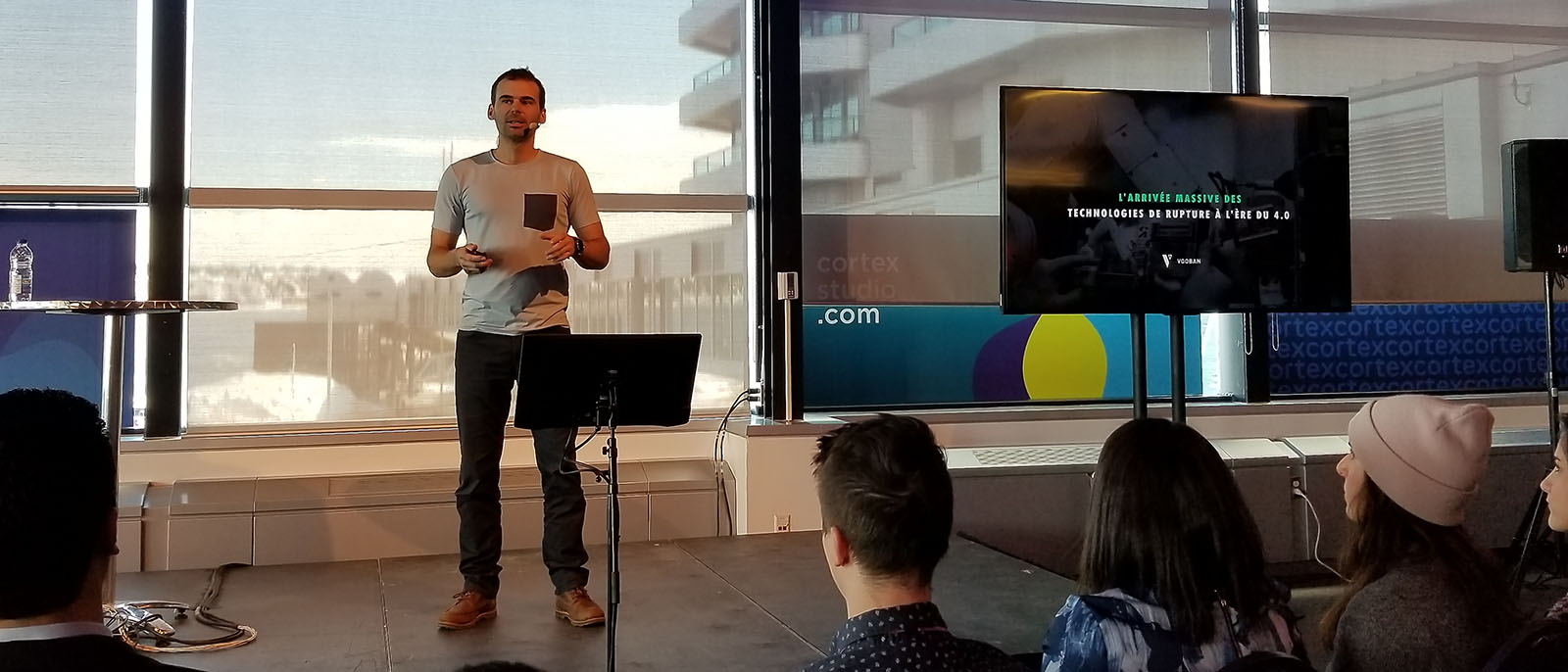
What is a disruptive innovation? It is an innovation with the power to completely overturn the largest players in an industry. The speaker offered many examples, including the usual Tesla, Amazon, Uber and Airbnb, along with less familiar names such as France’s Doctolib, which breaks down barriers between patients and doctors, and Lemonade, which transforms the speed at which an insurance payment can be received.
Beyond those innovations, the talk looked far into the future and imagined a society in which people could focus again on what they do best: creativity, empathy and managing ambiguity. According to him, numbing and repetitive jobs would undoubtedly be automated within 10 to 20 years.
Visit Vooban’s website: https://vooban.com/
Colin Megill
AI & the future of the political party
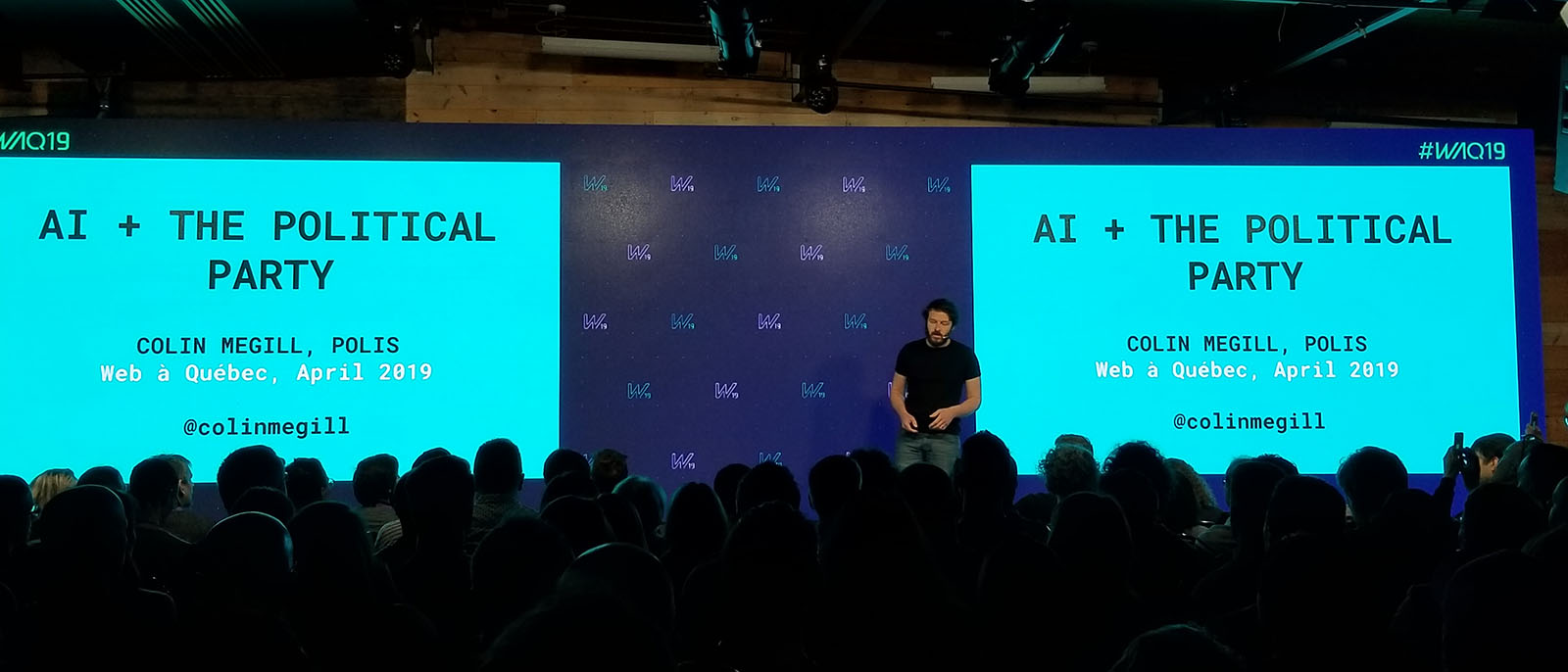
The pol.is platform offers an entirely new way to think about involving citizens in the political process. With a machine-learning approach, the qualitative opinions of thousands of people can be compressed into a summary that elected officials can understand. Already implemented in Taiwan, pol.is was being tested with the Government of Canada!
Visit the pol.is website: https://pol.is/
Simo Ahava
There’s data everywhere!
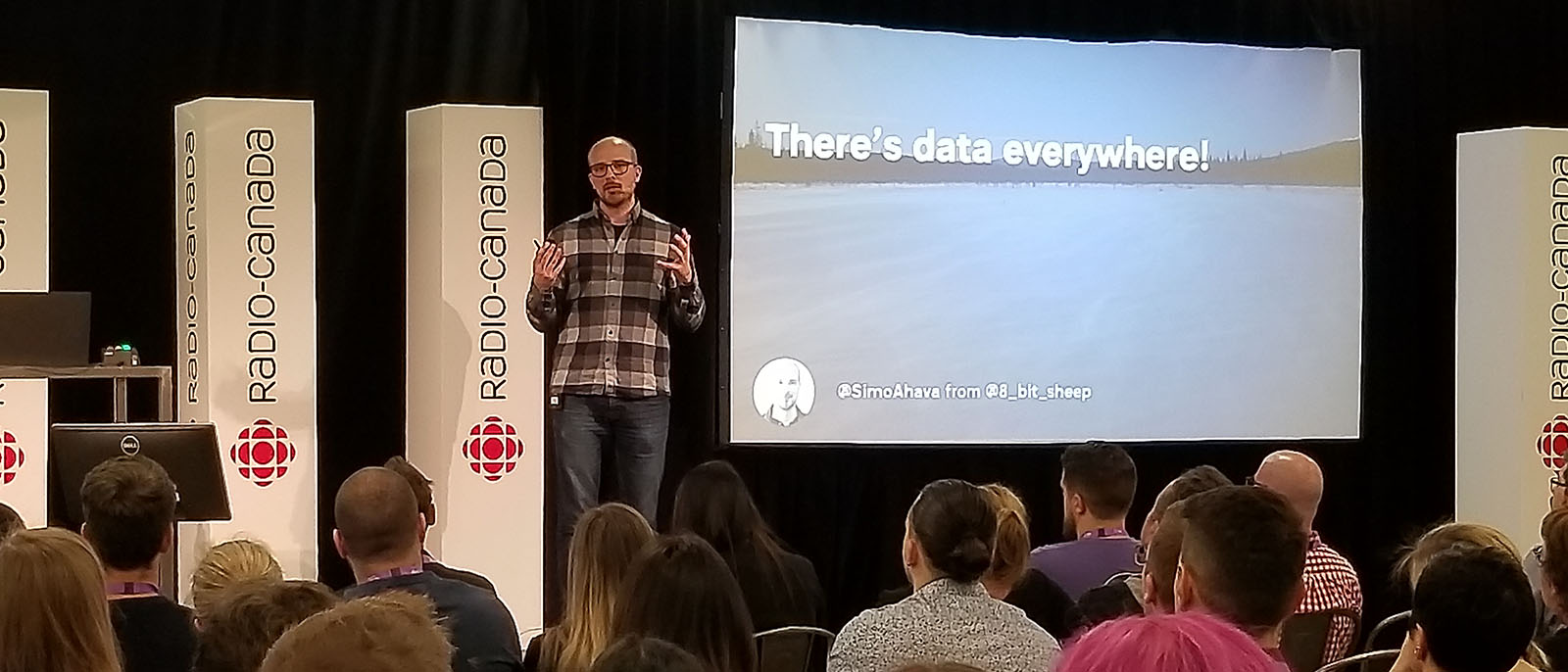
Simo, a true superstar of web analytics and GTM in particular, presented his vision of a high-performing analytics team: some members with expertise in the tools, others with expertise in the company’s market, and great maturity in both people and processes. Only when those three elements come together can team members work toward their shared goals. And the best way to organize the work? Scrum, even if it can feel uncomfortable at first!
Bonus points for his rant against the slightly backward concept of a session in Google Analytics.
Visit Simo Ahava’s website: https://www.simoahava.com/
Tim Wilson
Statistics Intuition for the Marketer (and Why It Matters)
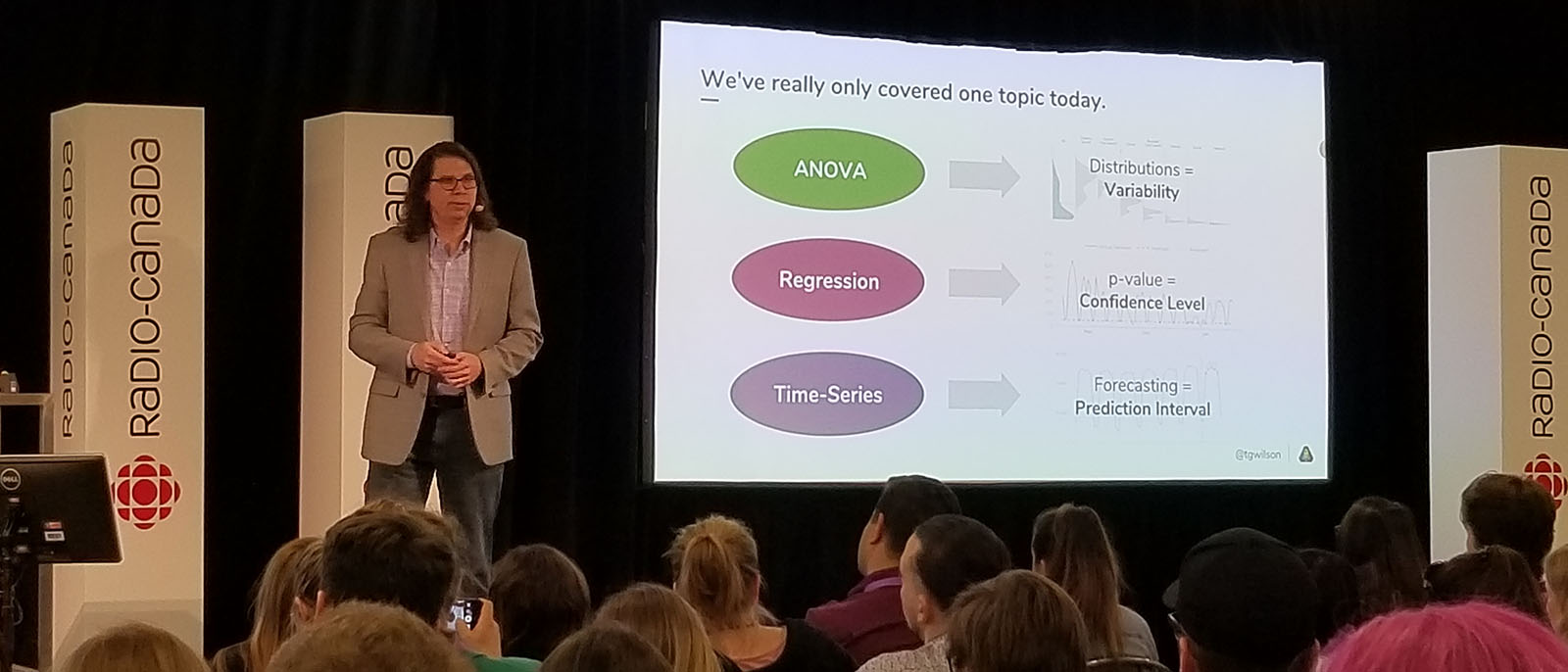
This was probably my favourite talk of the three days. In 45 minutes, Tim explained the basic principles of statistical analysis and introduced ANOVA, post-hoc analysis, linear regression and time series. In my opinion, explaining those methods so clearly and concisely is quite a feat. Beyond those crystal-clear explanations, he even showed a real application of all three statistical methods to web data.
In my opinion, statistical knowledge is a widespread weakness in digital marketing, in both practices and tools. Let’s hope this presentation starts a small wave of change in the industry!
Tim Wilson’s LinkedIn profile: https://www.linkedin.com/in/tgwilson/
Dina Zielinski
A future for digital data in nature’s oldest storage device
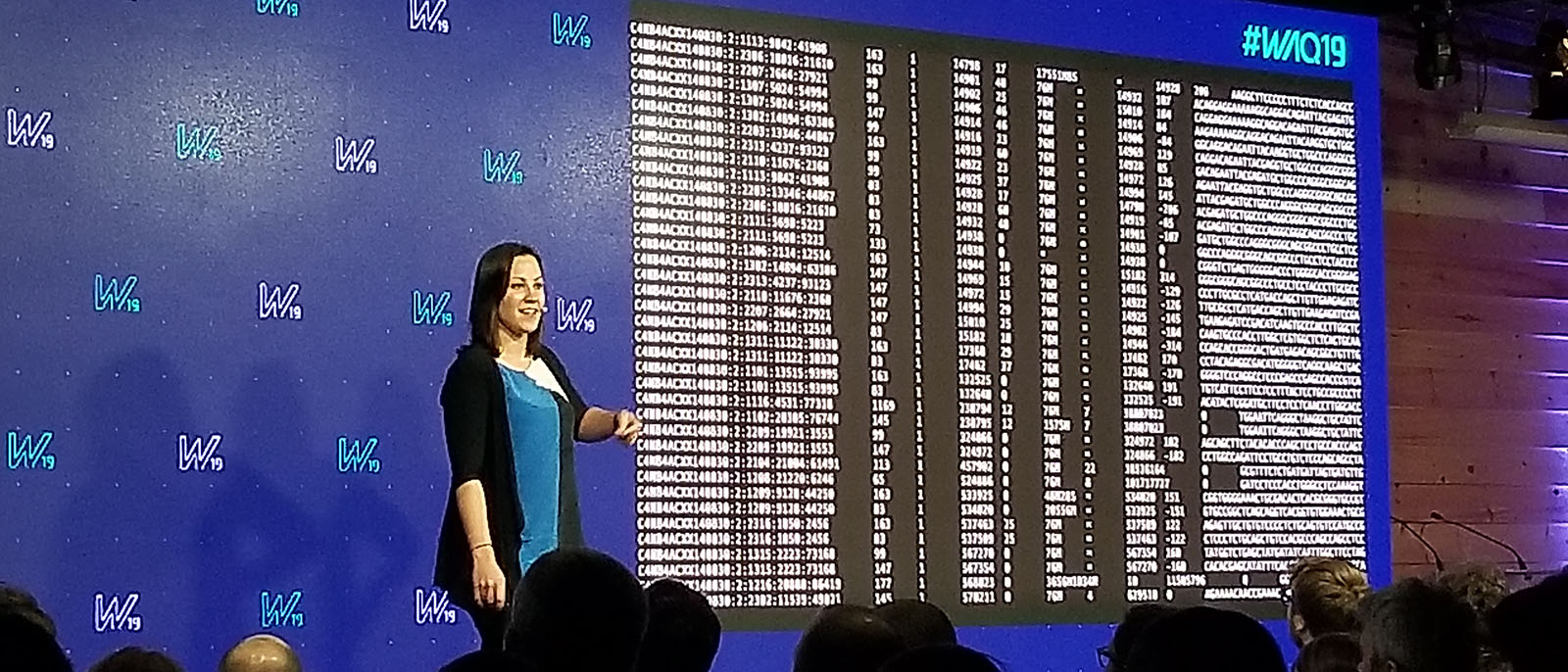
Did you know that digital data can be stored in DNA? Neither did I! The first study on the subject appeared in 1988, but serious research into this unusual storage method began only in 2007. It was far from ready for consumer use because of its high cost, US$9,000 to encode and decode 2 MB of data. A future use might be archiving humanity’s most important data because DNA can last more than 1,000 years under simple archival conditions and has unmatched information density. (Note 2026-09-02: The quoted price is the amount presented during the talk in 2019.)
Visit Dina Zielinski’s LinkedIn profile: https://www.linkedin.com/in/dinazielinski/
Jean-François Renaud
Optimal digital marketing budgets: using data
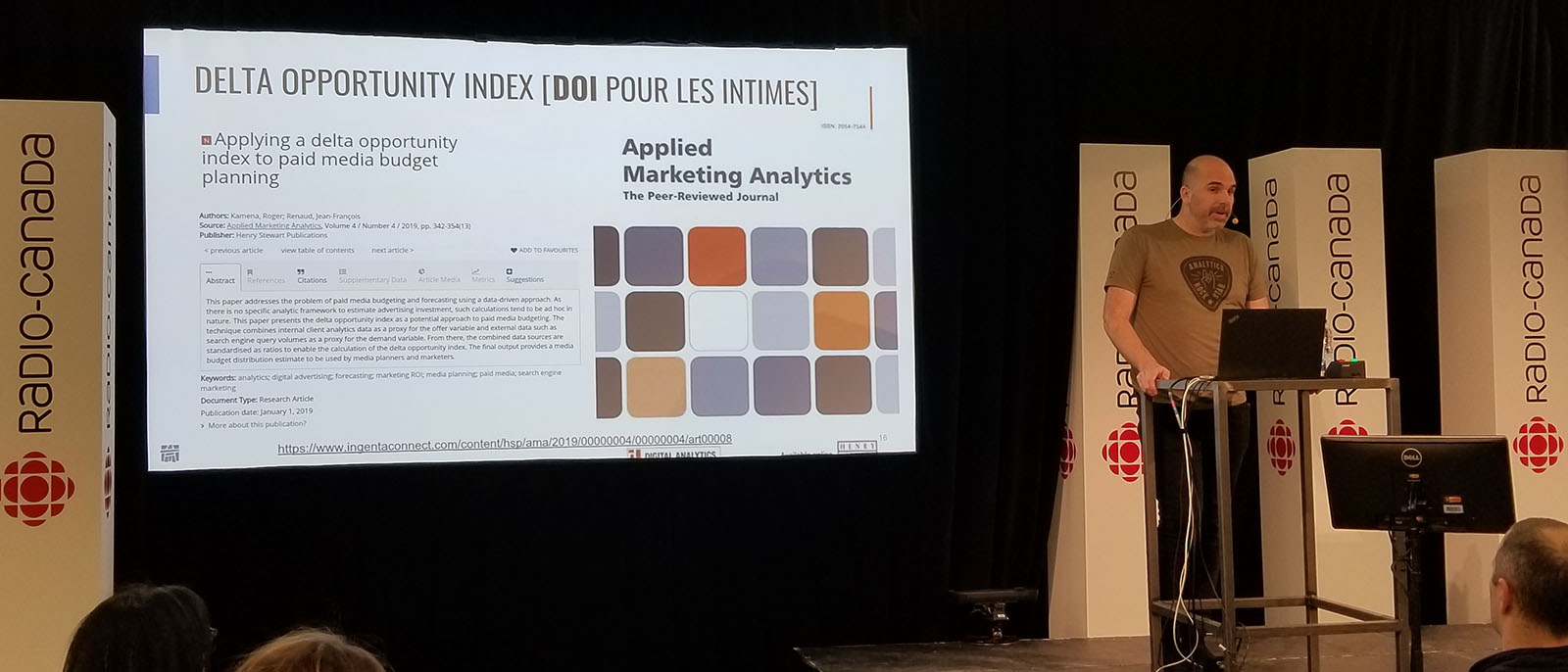
After a talk about storing data in DNA, we came back down to earth with the most boring subject imaginable, as the speaker himself described it, yet one that matters enormously: how many dollars to spend on digital marketing. A new method developed at Adviso, the Delta Opportunity Index (DOI), made it possible to adjust advertising budgets according to demand for the products and services offered. Why sell snowmobiles only through a single campaign in November when interest exists at different levels all year? It was clear how much Jean-François loved always-on marketing and did not particularly like campaigns. Judging by the results he achieved for clients, it was also clear that he had a point!
Visit Jean-François’s LinkedIn profile: https://www.linkedin.com/in/jeanfrancoisrenaud/
Read the academic paper on the DOI methodology: https://lp.adviso.ca/doi-waq2019
Rémy Savard
Gatsby: incredible performance, greater security and a better web-development experience
I am not a web developer (Note 2026-09-02: I am now a web developer.), but this talk caught my attention because it presented one of the many technologies that could generate a static website and deploy it on a CDN, making the site so fast that it did feel a little unreal. My main takeaway was that this technology could be used while keeping a familiar CMS such as WordPress, Magento or Shopify. Given the astonishing performance it could deliver, it seemed worth investigating, especially for ecommerce sites where every second of loading time lowers the conversion rate. To see an ecommerce site with more than 50,000 pages using the technology, take a look here, and attach your tuque with duct tape first: https://www.danielwellington.com/
(Note 2026-09-02: The technologies, platforms and website examples in this section are described as they existed in 2019.)
Rémy Savard’s LinkedIn profile: https://www.linkedin.com/in/remysavard
Vitaly Friedman
Bringing Personality Back To The Web
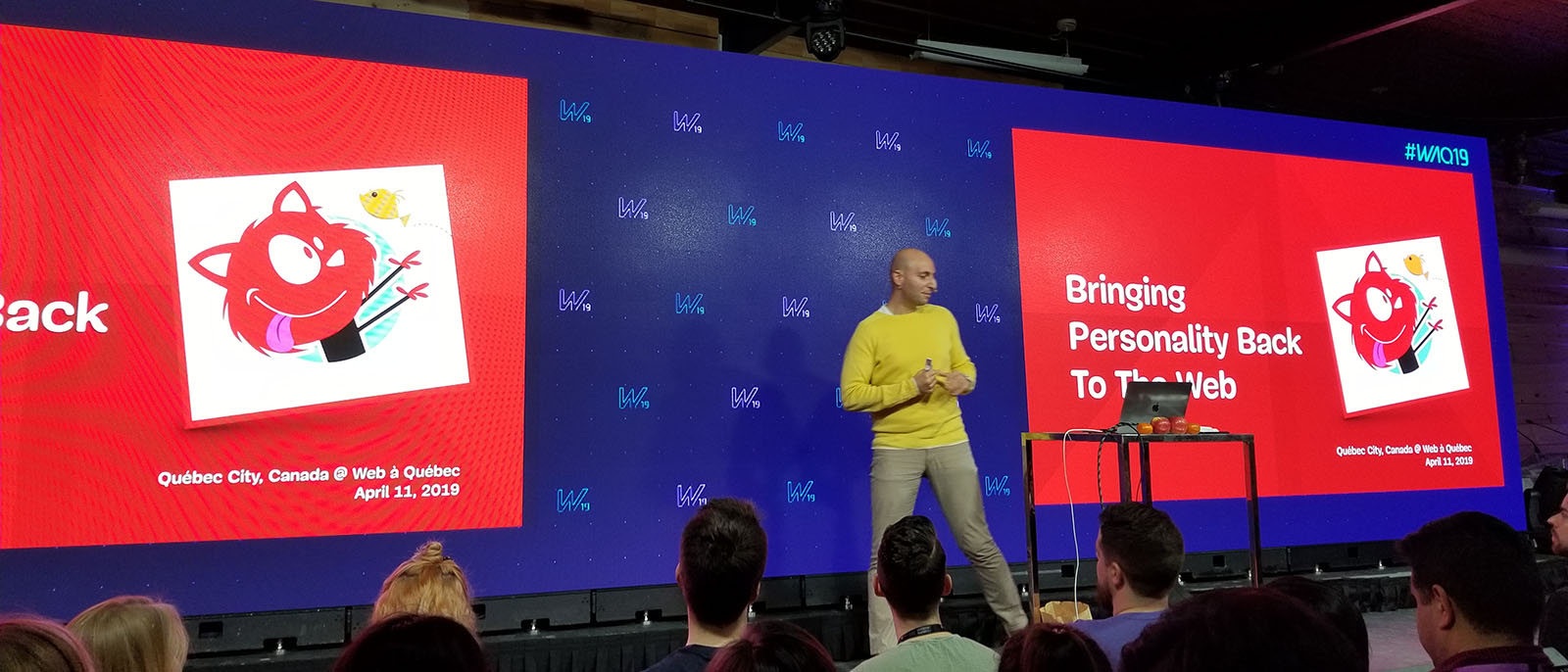
In 2019, modern websites no longer had any personality. Confined by the stylistic conventions created by responsive design and development frameworks such as Bootstrap, and by the drive to reduce friction at all costs, we had lost what was original, surprising and memorable about the early web. He even said he missed Flash Player! All was not lost, however. He highlighted several memorable modern websites:
http://dada-data.net (Note 2026-09-02: Unfortunately, the site no longer exists.) It was not entirely clear what the site was trying to do, but it was a genuine work of digital art.
https://www.sbs.com.au/theboat/ An absolutely fabulous digital comic.
https://www.bloomberg.com/features/elon-musk-goals/ What happens when designers are given complete creative freedom.
I thought this was a wonderful presentation with which to end a digital conference. It was completely unconventional and made you want to do things differently! Isn’t that the purpose of a conference? To learn new things and do them better, but also differently from everyone else!
Visit Vitaly Friedman’s website, Smashing Magazine: https://www.smashingmagazine.com/